the Addison Recorder

Pop culture dispatches from the Great Lakes

  • About
    • Authors
      • Travis J. Cook
      • -J.
      • Meryl Williams
      • Karen Martin
      • Christopher Walsh
      • Christina Brandon
      • Alex Bean
      • Andrew Rostan
      • PK Sullivan
    • Round-Ups
    • Submit to the Recorder
  • Arts
    • Films
    • Television
    • Music
    • Theatre
    • Games
    • Culinary Arts
  • Books
    • Books and Literature
    • Comics & Graphic Novels
  • Sports
    • Baseball
    • Basketball
    • Football
    • Hockey
    • Other Sports
  • Chicago
    • Events
    • History
    • Op/Ed
  • Podcasts
Pop culture dispatches from the Great Lakes

Author: Alex Bean

Recorded Conversations: the (cultural) object of our affections

June 29, 2012 by Alex Bean Leave a Comment

Welcome to “Recorded Conversations,” an occasional feature where all the Addison Recorder editors contribute their thoughts about a question, idea, or prompt. Everyone will chime in, and then we see where the conversation wanders. The question for this first Conversation was posed by Alex Bean:

Question: What cultural object (movie, music, show, book, play, whatever) do you find yourself coming back to again and again over the years?

—

This is a pretty wide-open question, but I like that for our inaugural run of this feature. It means that there’s lots of room for all of us to play around and explore what makes us tick. Personally, I thought I knew what direction I was going to go with this question, but as I sit here my mind is changing. Initially, I had thought to make my answer something like John Ford’s seminal The Searchers. If I had to pick a favorite movie that would be it for a whole variety of reasons.

But, the question posed is not about favorites per se, but about what we can’t seem to get enough of. The object that I return to time and again is not The Searchers, or Deadwood, or any of my myriad other favorites. No, I always find myself inexorably drawn to sit down and enjoy that grand staple of American television: the sitcom.

I’m not sure exactly when my love for the sitcom started. I can remember watching a lot of NBC’s mid-90’s greats like Seinfeld and Newsradio when I was younger. Tim Allen’s old series Home Improvement was definitely appointment viewing in our household. That’s unsurprising considering that my dad loved doing his grunty-hoot thing like it was going out of style (which it was). In high school I had the TV schedule memorized so that I could jump between comedy reruns, eliding around the heavy-handed nighttime soaps or dry procedurals. By college, my obsession was in full bloom. I can recall skipping student organization meetings in order to stay in my dorm and watch The Office.  When you’re a freshman who knows no one else on campus the funny people on TV can be a more welcome sight than the myriad strangers all around.

These days, much of my down time is filled by one sitcom or another. Be it a new episode of Happy Endings on Wednesdays, or queuing up an episode of Better Off Ted for the umpteenth time on Netflix while I play a video game, TV comedies are a constant presence in my life.

When you combine those two activities, you get Skyrim’s top-rated sitcom, “Shouting at Draugr”

There is an eternal tension in sitcoms that makes them endlessly consumable for me. Their most obvious function is to deliver jokes, which must rely on an element of surprise in content or delivery. But underlying even the most anarchic joke machine shows (such as Seth McFarlane’s many, many cartoons) is a finely-tuned narrative structure. The series has an established setting and cast of characters, which each episode disrupts in some fashion. These disruptions, such as Liz’s perpetual romantic troubles on 30 Rock,  are the motor behind the jokes. However, each episode must resolve its disruption within that same episode or else risk alienating the audience.

So, no matter how many times I watch The Venture Brothers, there is always that tension between the comic disruption caused by the Guild of Calamitous Intent’s half-brained attacks on the Ventures and the knowledge that the problem will be resolved within twenty minutes. It’s engaging without taking up my whole brain; hilarious without being challenging at the end of a long day.

Go Team Venture!

So, that’s me, what about all of you?

Read the responses from the other editors: Andrew, Travis, and -J.

Posted in: Recorded Conversations, Television Tagged: 30 Rock, Sitcoms, Television, Venture Brothers

Our Own Special Place: Thoughts on Moonrise Kingdom

June 25, 2012 by Alex Bean Leave a Comment

I am incapable of neutral feelings when it comes to Wes Anderson.

Since the Recorder is a magazine devoted to opinions, that’s not going to get me in any trouble, but I wanted to throw it out there anyway. I lack objectivity in this piece because it’s about my thoughts on the new Wes Anderson film, Moonrise Kingdom. To make a long story short, I loved it to death, but where’s the fun in making a long story short?

I first encountered his films when I saw The Royal Tenenbaums with my aunt and uncle sometime during Christmas break my freshman year of high school. Tenenbaums is a big, grand movie, messy and alive with laughter, compassion, and deeply felt sadness. I was delighted and intrigued. My aunt and uncle hated it as much as I liked it. The next time I went to Hollywood Video (remember that place?) I checked out another film, Rushmore, by the same director-writer.

Over the course of the three-day rental, I watched Rushmore four times. First by myself in the basement on Friday night, again the next day with my 11-year-old sister who mostly found it baffling, and twice more on Sunday with and without the commentary from Anderson, his co-writer Owen Wilson, and the star Jason Schwartzman. By the time my dad drove the DVD back to the store on Sunday night I was hooked. Something in that little 90-minute tale about a lonely, weird high school boy’s unexpected connection with two equally lonely souls lit me on fire. Too wry and idiosyncratic to be mainstream, but funny in such unexpected ways and expressionistic that spoke to me in ways that art, literature, and religion never had. Rushmore was a tiny, beautiful world unto itself. It was made whole by Anderson’s devotion to detail and made worthwhile by its acknowledgement that life could be hard and dispiriting, but you should certainly come out the wiser.

 I scoured the internet for something, anything I could find about Rushmore, Tenenbaums, Anderson, or any other person or thing related to those films. This continued unabated for at least a year and a half, and had the inadvertent effect of throwing me headlong into the world of cinema. Since I was a devotee of Anderson’s work I tracked down the films that inspired him. I convinced my parents to let me rent The Graduate and Jules et Jim. When I saw those I turned around and found more movies related to them. I found that film was a vast, undiscovered country filled to the brim with the emotion and thoughtfulness that seemed in short order in my high school life. Cinema, and the cinema of Wes Anderson in particular, became a safe haven, where I found people who felt as broken and adrift as I sometimes did. Fast forward 10 years to today and, that still rings true. My obsession with cinema did not wane in the months or years after I first saw Rushmore. It grew exponentially into a full blown career path, and, well, here we are.

[Read more…]

Posted in: Films Tagged: Wes Anderson

A Tale of Two Trailers: American Mythmaking Coming Soon to a Multiplex Near You

June 13, 2012 by Alex Bean 1 Comment

I love a study in contrasts.

Back in high school English, my class was assigned Ernest Hemingway’s The Sun Also Rises while another class was tasked with The Great Gatsby by F. Scott Fitzgerald. Being curious, I asked my teacher why we were not all reading the same novel. He told me that he thought the two books were always paired in his mind, contrasting visions of a generation of Americans adrift after the cataclysm of World War I. He liked teaching both at the same time because the immediate comparison illuminated the strengths and weaknesses of each novel. Hearing this, I raced to the book store and bought a copy of The Great Gatsby so that I might do the same mental exercise as my favorite teacher.

I greatly enjoyed The Sun Also Rises; its terse, direct prose and understated emotion garnered my praise in class discussions when few others came to its defense. In truth though, I barely remember that novel now because it paled next to The Great Gatsby. Gatsby was everything I wanted a novel to be at that time and place. For a junior at an all-boys Catholic high school in suburban Detroit, an exciting life seemed a remote possibility (first-world problems, I know). To read the story of a Midwestern boy like myself, who pulled himself into the highest strata of society in pursuit of a lost love was just perfect. It was wish fulfillment that doubled as a badge of prestige. By identifying myself with poor, doomed Jay Gatsby, I was saying that was the life I wanted.

Not in the particulars necessarily, but in the big, broad symbols and emotions that Fitzgerald embraced and Hemingway kept at arm’s length. I would be that rare, successful somebody who kept his soul locked away from greed and avarice. Maybe I wouldn’t be grasping for a green light at the end of a dock, but something similarly romantic and important would work just as well. The Great Gatsby gave me that dream, that dream of America as a land of endless opportunity, even as it devoured those who dreamed too big.

[Read more…]

Posted in: Films Tagged: Baz Luhrmann, Christoph Waltz, Cinema, Jamie Foxx, Leonardo DiCaprio, Quentin Tarantino, The Great Gatsby, Westerns

Our Long National Nap: Baseball as America’s Most Boring Sport

June 6, 2012 by Alex Bean Leave a Comment

A few college-football-themed blogs celebrated a minor holiday recently. Wednesday, May 23rd, marked 100 days until the 2012 college football season kicks off.

Understandably, in the estimation of sites like EveryDayShouldBeSaturday.com and its ilk this was a momentous occasion. For the madly faithful, like the men who run those sites, such a date is akin to the solstice celebrations of early civilizations around the world. It marked a moment of passage and equanimity, wherein the previous year’s toil and effort was handed off to memory and the anticipation for what lay ahead could begin in earnest.

Being a die-hard college football partisan (Go Blue!), I must say that I understood this celebration entirely too well. I have a way of viewing summer holidays not as celebrations of leisure and nature’s fertility, but as the stepping stones towards that marvelous autumn festival of pads and pageantry that is football season. Memorial Day is around the time that the season preview magazines are released, the 4th of July means I can start talking about it with friends, and the dog days of summer in late July and early August are when training camps open and I can devote myself wholeheartedly to reading tweets about the progress of this senior wide receiver or that incoming freshman at linebacker.

This is a celebration of being able to talk about football without feeling weird about it.

Summer is, of course, packed with all the excitement of sporting the Major League Baseball season. Why not put off my football obsession until pads are actually being put on? My answer: baseball is boring as fuck and increasingly irrelevant to American life. These are bold words, and I expect a rebuttal from at least one of my colleagues on the Addison Recorder, but I stand by them.

[Read more…]

Posted in: Baseball, Sports Tagged: baseball, college football, sports

Losing Their Funny Bones: Structural Failures in Sitcoms and the Decline of How I Met Your Mother and The Office

June 2, 2012 by Alex Bean Leave a Comment

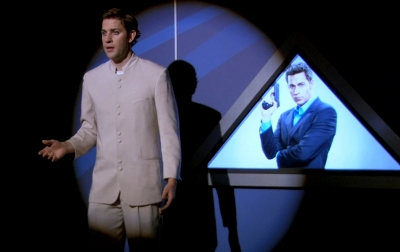
John Krasinski in one of The Office's lower moments


This will hardly come as a surprise to anyone paying attention, but the American edition of The Office on NBC and How I Met Your Mother on CBS are closer to their last episode than their first. What might surprise some is just how badly these two mainstays of American TV comedy of the past decade are showing their age. In the past two months both shows lumbered across the finish line, wrapping up their most recent seasons, eighth for The Office and seventh for How I Met You Mother to little acclaim. In fact, much of the conversation about both have centered around questions as to why the series are even bothering to continue producing new episodes. Debates about the quality of the shows’ current output or their future endeavors aside, the twinned declines of The Office and How I Met Your Mother provide insight into the way American television creates and sustains comedies and why so many fall apart under their own weight.

The Office and How I Met Your Mother debuted only a few months apart in 2005, and quickly the kind of critically acclaimed but lightly viewed comedies that had popped up and been snuffed out, off and on, since I Love Lucy blazed the trail for TV comedy in the 1950s. The Office’s mockumentary style and cringe-inducing humor were lifted wholesale from its British predecessor, and when combined with a cast of reliable comedic talent led by Steve Carrell, lent the show much of its appeal. How I Met Your Mother was more traditional in its style and humor, it is a 3-camera sitcom shot primarily on 2 sets, much like Seinfeld, Cheers, and most every mega-popular sitcom since the aforementioned Lucy. Where it differed was in its narrative structure, centered on a framing device of a middle-aged dad in the 2030s telling his kids about how he met their mother, the show specialized in plots that featured heavy doses of asides and callbacks. Most every episode involved some kind of storytelling derring-do, having as much fun in the telling of its story as it did in the actual contents of the story.

Both shows then, had notable differences from the generation of mega-popular sitcoms that were being retired as they came on the air. Friends, Frasier, and Everybody Loves Raymond, shows that had won both massive audiences and critical acclaim, all left the air in 2004 or 2005, and left no clear successor in their wake. Shows like Arrested Development had won wide acclaim but not broken through with audiences, and both The Office and HIMYM more or less followed in that show’s footprints. They carved out a niche on their respective networks, produced consistently high-quality episodes for about 4 seasons, but never broke through as true water cooler hits. They were something more than cult hits and something less than comedy blockbusters, and in an era when TV in general was bleeding viewers every week that was good enough.

Even at the peaks of their popularity and acclaim though, both shows suffered from some notable flaws. The Office’s mockumentary format meant that the Dunder Mifflin workers that TV audiences got to know so well were aware of their role as TV characters, since the premise of the show was that a documentary was being filmed about this particular office. This meant that the rhythms and agonies of everyday office life could be filmed realistically, and lent much to the blooming romance between Jim and Pam that defined so much of the first few seasons. However, it also meant that when the characters acted stupidly or unbelievably it tested credulity in ways that characters in a more typical sitcom would not. When Dwight climbed on the roof of a house during a corporate party to test the sturdiness of the chimney’s masonry or Michael camped in the woods to prove his managerial mettle it elicited as much eye-rolling as chuckling. No fools could truly act so foolishly in real life without sever repercussions, and since we were meant to believe that this was a real office such antics often acted as a drag on the show. This also lead to the writers taking liberties with the characters, changing their motivations and actions from week to week so as to meet the needs of being simultaneously ‘real’ and characters on a sitcom (i.e. the weekly guessing game of how smart Carrell’s Michael Scott or Ellie Kemper’s Erin Hannon were from week to week).

How I Met Your Mother’s unique narrative format also acted as an occasional wrench in much the same way. While individual episodes thrived on the narrative play, such as the sublime Pineapple Incident episode, increasingly the over-arcing narrative became a weight around the show’s neck. The initial seasons were thrilling in their ability to weave a great romance through the protagonist Ted’s everyday life with his friends. Hints of his future happiness would be dropped, and the audience has great fun guessing whether or not this girlfriend or that ex would become the much-awaited mother. As the series entered its 5th and 6th seasons though, and the search for his future wife dragged on with much repetition and only hints towards some kind of resolution, any sense of overall narrative momentum was lost.

For both The Office and How I Met Your Mother these troubling tendencies came to a head in the 2011-2012 television season. On The Office the departure of Steve Carrell from his leading role left the series utterly rudderless. Carrell’s performance had held together many episodes through sheer force of will, and the writers failed to prepare themselves for what was in essence a series reboot by writing all of the supporting characters into corners that did not allow them to step into the spotlight. The central couple of Jim and Pam were ensconced in family-building, having flirted with greater responsibilities or opportunities but failed to pursue them. Other characters, like Dwight or Andy had been under-served in the past, turned into weak caricatures of recognizable types that could not rise into the spotlight. This meant that the show spent most of the past season searching in vain for some vein of comedy to mine, taking turns with romance, corporate satire, and other plot shakeups but none took hold. The show’s core conceit had been stretched too thin, the characters had run out of stories, and the show spent each week wallowing around. It attempted to redo formerly winning plot-lines, perhaps most notably a retread of season five’s Michael Scott Paper Company. In the final few weeks it seemed to depart from recognizable office politics entirely, creating utterly unrealistic narrative twists like Catherine Tate’s odd Nellie usurping Ed Helm’s Andy simply by moving into his office.

On How I Met Your Mother the necessities of the over-arcing narrative meant that that show also fell back on old plot-lines. Cobie Smulder’s Robin briefly revived her romantic feelings towards both Neil Patrick Harris’s Barney and Josh Radnor’s Ted. Marshall and Lily (Jason Segel and Alyson Hannigan), the show’s resident married couple, spent the season vacillating on where to live suburbs vs. city) and how to start a family (baby now?), but without any real sense of play. For the most part, the show simply spun its wheels, introducing one-off characters and somewhat lazily wasting time while waiting for the Mother’s eventual reveal (presumed to be in the series’ final episode, which may be years in the future). A few episodes stood out, most notably the wrenching Symphony of Illumination, when Robin dealt with the news that she was infertile and would never have children by addressing narration to her imagined, never-to-be, children. But for much of the season viewers were treated to seeing Barney deal with becoming less a sociopath for the fourth straight season and Ted drifting ever deeper into outright douchbaggery, neither of which felt fresh or winning.

The problems in both shows latest seasons are, in essence, representations of the structural supports of nearly every American TV comedy. TV sitcoms are built on a very solid narrative structure. In essence, the show’s basic premise (documentary filmed in small office or dad tells his kids how he met their mom) must be maintained episode to episode. This means that the overall narrative can only move at a glacial pace, so as to make sure that the balance of the basic premise is not too upset. If Ted meets the mother while grabbing coffee one morning or the denizens of the office go about their jobs without comedic hi-jinks the entire endeavor could become dangerously unfamiliar to the audience. Since TV networks want their shows to appeal to as many viewers as possible, this means that no one in the audience who is even vaguely familiar with the series should ever be lost as to what is going on in a particular episode.  This works well enough for 50-75 episodes, but eventually the bloom comes off the rose and what once was fresh suddenly seems endlessly dull. Because of this, neither The Office nor How I Met Your Mother have been able to grow or change organically. Stuck in this strange stasis of a long-running sitcom world, they have responded by disappointing many of those who once loved them. Such a fate is hard to endure for a fan of any once-great show, but until every TV executive decides that the way to make money is to emulate the narrative chutzpah of outre series like Mad Men or Louie (about which more will be said in later essays from yours truly) it will befall many more series in the future.

 

Posted in: Television Tagged: How I Met Your Mother, Sitcoms, Television, The Office
« Previous 1 2 3 4 5 … 7 8 9 10 11

Share

Share on twitter
Twitter
Share on facebook
Facebook
Share on google
Google

Addison Recorder on Twitter

Addison Recorder
  • Andrew pays tribute to George Martin, producer without peer, and keyboard maestro Keith Emerson. https://t.co/I3N5iKiMXY 12:00:56 PM March 14, 2016 ReplyRetweetFavorite
  • 90 minutes to #Oscars so one more time - Alex, Andrew, and Travis make their picks. https://t.co/X23YYQ4J3i 05:59:57 PM February 28, 2016 ReplyRetweetFavorite
  • The annual Oscar Picks column is up! Alex, Andrew, and Travis tell the cold, hard truth about the nominees. https://t.co/X23YYPN7EI 12:21:01 PM February 26, 2016 ReplyRetweetFavorite
  • T-minus two hours to the @TheGRAMMYs - more than enough time to revisit Andrew's Album of the Year recap. https://t.co/BhUdmb97Wi 04:59:46 PM February 15, 2016 ReplyRetweetFavorite
  • Andrew previews the @musicboxtheatre 70mm Festival starting 2/19 and recommends some essential films! https://t.co/C2S6y3gkgq 12:04:12 PM February 12, 2016 ReplyRetweetFavorite
@addisonrecorder

Recent Posts

  • The Smartest Guys in the Room: Remembering George Martin and Keith Emerson
  • Oscar Picks 2016
  • Mr. Rostan at the Movies: 70 Millimeters of Sheer Adventure
  • The Claustrophobic Folklore of The Witch
  • 2666 at the Goodman Theater

Archives

Follow Us!

Follow @addisonrecorder

Recent Comments

  • Mr. Rostan at the Movies: 70 Millimeters of Sheer Adventure on Alex and Andrew Debate the Sight & Sound List: Part One
  • The Claustrophobic Folklore of The Witch on The Horror of Metaphor in It Follows
  • Mr. Rostan at the Movies: Catching Up With Oscar on Our Month in Pop Culture: May 2015
  • Mr. Rostan at the Movies: Catching Up With Oscar on Oscar Nomination Reactions – 2016
  • War Damn Peter on Celebrating 50 Years of “A Charlie Brown Christmas”

Meta

  • Log in
  • Entries feed
  • Comments feed
  • WordPress.org

Copyright © 2025 the Addison Recorder.

Church WordPress Theme by themehall.com