the Addison Recorder

Pop culture dispatches from the Great Lakes

  • About
    • Authors
      • Travis J. Cook
      • -J.
      • Meryl Williams
      • Karen Martin
      • Christopher Walsh
      • Christina Brandon
      • Alex Bean
      • Andrew Rostan
      • PK Sullivan
    • Round-Ups
    • Submit to the Recorder
  • Arts
    • Films
    • Television
    • Music
    • Theatre
    • Games
    • Culinary Arts
  • Books
    • Books and Literature
    • Comics & Graphic Novels
  • Sports
    • Baseball
    • Basketball
    • Football
    • Hockey
    • Other Sports
  • Chicago
    • Events
    • History
    • Op/Ed
  • Podcasts
Pop culture dispatches from the Great Lakes

Arts

the TableTop on your Laptop

June 5, 2012 by -J. Leave a Comment

Earlier this year, the U.S. government played host to an awkward confrontation: scores of politicians and traditional media distributors coming face-to-face with the reality of their digital ignorance. Ostensibly while discussing online piracy, the powers-that-be of today displayed their inability to understand anything other than the modes and methods of the past.

Sen. Blunt interrupted the proceedings, citing the need for some "dadgum tech support"

But I’m not writing to re-hash the SOPA/PIPA debacle. Rather, I’m looking at something slightly tangental: that media distribution is at a moment of upheaval. Like DVDs and cassette tapes, or cable TV, the Internet continues to shake up media distribution. The big difference is that the ‘Net is proving to be a much more disruptive (or revolutionary) means of distribution.

It isn’t only that Hulu, Netflix, YouTube and their ilk are getting media to us instantly and on-demand. It’s also that the differentiation between media producer and distributor is blurred to the point of indistinction. “We are becoming more like them in doing some originals, starting that journey,” stated the CEO of Netflix, comparing his company to HBO, “and they are becoming more like us in creating an on-demand interface.”

And these types of ‘new media’ production & distribution can have tangible effects outside of the Internet. Because I enjoy silly juxtapositions, I’m going to look an example of this distribution + effect that mixes digital with analog: a Web show that focuses on a subject far removed from the digital and online world — tabletop games.

(Yes, I know that board games are on my iPad; I’ve been waiting for a bloody update to the Small World app for at least a year. And, yes, I know Skype and Google+ hangouts are used by gamers to play tabletop RPG’s when not in the same vicinity. But go with me here, it seems like a juxtaposition.)

Seriously, Days of Wonder, it's like that giant is mocking me with his lack of updates

When we talk about tabletop games, we’re talking about an activity that is about as social and in-person as can be (yes, with the exception of board games you play online, though that’s still social. Stay with me here). Where was I…? Ah, yes: in-person-ness, juxtaposition, tabletop gaming

I’ve got a long-time love for playing games around a table. Children born into our branch of the Bestul clan learn cribbage and auction pinochle before they matriculate from elementary school. My brother and I spent the long car rides during family vacations designing tabletop games (yet never finished any of them, really). When it came time to write my Master’s thesis… yup. Games showed up there, too.

Despite my self-professed and alleged knowledge, the proprietor of my local game store had some very sage words for me: namely, that Wil Wheaton has more influence (even amongst my friends) than I do.

That is, even if I am geeked about a game, I’m not going to have an effect beyond the friends I can convince to come over and play at my table – if I can convince them to do so. Wil Wheaton, on the other hand, can convince complete strangers to seek out a game. See, I had stopped by the shop to pick up a copy of Small World (the actual board game, not the app), which turned out to be the last copy of the game in stock. The rest had disappeared off the shelves due to what might be termed the “Wheaton Effect.”

For those unfamiliar (or who didn’t click on that last link), here’s what I mean: a few months ago, nerd icon Felicia Day (along with other such icons) started a YouTube channel titled Geek & Sundry. On this channel, Wil Wheaton hosts a Web show called TableTop, where he invites friends over to play board games. The first episode featured the game Small World. Consequently, copies of that game flew off the shelves.

The show itself is a bit silly, and a bit dorky, both positive qualities in my opinion. Most importantly, it’s also fun. Simple, silly, and unabashed fun. It’s one of the few TV shows that I make it a point to sit down and watch as soon as it’s released.

(Sure, it may be a ‘Web show,’ but since I have the technology to watch it on my television, I therefore dub it a TV show. Behold my fallible logic.)

While I may be a devoted viewer of TableTop, I’m also a pretty easy demographic for the show. But that’s part of what’s interesting – it so readily displays the strength of ‘new media’ distribution in not only targeting niche demographics, but also large swathes of viewers who are tangental to the niche. To wit:

A lot of people like board games. They may not go out of their way to become well-informed board game consumers, but they still like (or love) playing board games. They may not approach the level of ‘geek’ – hanging out at game stores, spending hours on BoardGameGeek.com, reading trade publications & blogs – but if you put something fun in front of them, they’ll play for hours.

This is where TableTop shines: it’s an accessible, entertaining sub-30 minutes every other week that showcases new & old games for the viewing pleasure of geeks & non-geeks alike. Because the trick is not in finding people to like board games – the trick is to prove to potential players that some game they’ve never tried will be a good time.

Enter TableTop. As a Web series, it’s pretty easy to find or stumble upon the videos. And once you do, you see people playing a board game and having fun. A lot of fun. And, hey, you could do that, too. You’ve got friends, you’ve got time… all you need is a copy of that board game. Heck, maybe one of your friends already has it. You can easily replicate what you see on TV – erm, on the Internet.

Therein lies the “Effect.” Wheaton’s Web show about board games has a pronounced and demonstrable effect upon the market. Small World, for example, has been around for a few years, now. It’s won awards, garnered critical praise, and one of your friends might already have it on their shelves. But folks may have never had the chance to see or play the game, which is a bigger obstacle than it might seem.

I’ve personally hooked a fair few folks on a board game called 7 Wonders. It’s a ridiculous amount of fun, but like any geeky board game, I had to overcome obstacles. Namely, the prejudice of: “that looks way too complex to be fun…” If you can get past that erroneous preconception, you’ll be playing it for hours, over and over. But you still have to get past that first big speed bump.

You also have to get past this cat, who is sitting atop the rules

TableTop is a fun and entertaining way to bypass that bump. You see people playing & having fun. You may not know the rules, but that doesn’t matter – it looks fun. Once that mindset is in place, that preconception is overcome, it’s much easier to get people to sit down for a game.

And getting various and sundry folks to gather together & sit down for a game is a laudable goal and achievement. Especially when that goal is achieved by simply showing a few (hundred thousand) people how damned fun a game is.

Which, while I’ve got you here, let me tell you about this game called 7 Wonders…

Posted in: Board Games, Games, the Internet Tagged: 7 Wonders, board games, Geek & Sundry, new media, Small World, TableTop, Wil Wheaton

Another Modest Proposal

June 4, 2012 by Andrew Rostan Leave a Comment

When Adam Yauch died before his time early in May, I wasn’t sure how to react, because I am not and have never been a Beastie Boys fan. My “tortured” adolescent years were spent with Harry Chapin and classic CTI Records and John Coltrane that nobody I knew listened to. I was out of it. And I still am in many ways.

Readers of this periodical need to know upfront: the tally marks of my contemporary cultural failings would cover the entire John Hancock Center. I have almost zero exposure to the Lethem-Wallace literary generation. I enjoy a well-made chick flick, Barry Manilow, Air Supply, Andrew Lloyd Webber, and cartoons made for children. And I am not caught up with a single show airing on TV right now…I have not even SEEN a single episode of Louie, Justified, Community, or Breaking Bad.

But there is one attribute of my current tastes which unanimously draws derisive or aghast reactions from all of my friends, so I am going to launch my pieces by bravely facing this six-ton elephant in the room.

I think very highly of Taylor Swift.

Remember, these are OPINIONS.

And I am saying this in Chicago, a cradle of blues, jazz, and experimental music–the antithesis of lily-white feel-good country-pop something-else-that’s-hyphenated.

I understand why Swift has her detractors, but her virtues far outweigh her weaknesses and keep getting stronger. For one thing, she has one of the most impeccable gifts for pop music composition anyone could ask for in an artist so young. I would seriously compare her to John Lennon and Paul McCartney at the same age: though worlds apart genre-wise, A Hard Day’s Night and Fearless are two albums filled with hooks, albums on which the vast majority of songs, be they driving uptempo rockers or torchy ballads, have incessant melodies. I still remember cruising along my street in Los Angeles and hearing “You Belong With Me” for the first time…that song stayed in my head for months and I knew from then on Swift would be a superstar.

To be perfectly clear, saying that Swift and the young Lennon & McCartney have comparable musical talent is definitely not saying she’s in the same league as the Beatles. Far from it. Because even in their early 20s, John and Paul had mastered a secret of great pop music: being able to write lyrics which anyone can relate to. Even though the Beatles were clearly four young men singing, and their lyrics were written from a male point of view, the thematics they dealt with were universal. You can be any gender, any race, any age, and you can relate to the heartbreak and anger and goofiness and love the Beatles sang about. “In My Life” and “Let it Be” are not tied to a specific young man’s feelings but deal with emotions and desires we’ve all experienced, couched in precise language which doesn’t date or overly ground the song. Leonard Cohen, Carole King, and Joni Mitchell write much the same way, and no one is greater at it than Bob Dylan.

Swift is not at their level yet, and that she can reach that level and stay consistent is far from certain. For all the musical joys of her albums, the majority of her lyrics are written from the unmistakable point of view of a teenage or just-past-high-school girl. Her vocabulary, psychology, and imagery all are tied to a slightly immature and almost always feminine point of view: the storybook fantasies of “Love Story” and “Mine,” the oh-I’m-growing-up “White Horse” and “Picture to Burn.” and the blatantly obvious “Fifteen” and “Today Was a Fairytale” (the latter a horrid piece of dreck). Indeed, my second thought after judging “You Belong With Me,” a minor pop masterpiece was that the lyrics were some of the worst I’ve ever heard…but that’s partly because I am not a teenage girl. Swift knows her audience well and writes for them. This isn’t necessarily bad, but as a pop-rock devotee I couldn’t help but wonder if she would remain mired in this state for the rest of a short or prolonged and ultimately embarrassing career.

Two songs changed my opinion and now put the cap on my argument. When I heard “Back to December” for the first time, I was shocked…then delighted. Swift had finally written a song which never made me feel it was coming from a teenage girl’s point of view. “Back to December” was a near-perfect ballad about the confusion and pain anyone can feel when encountering an ex-lover whom they still have regrets over. Her tone was fragile yet strong and above all mature. The art involved went beyond the music and lyrics; Swift broke from her usual kind of twangy guitar and keyboard arrangement to frame her voice in the great Paul Buckmaster’s strings.*

And just this year, Swift co-wrote and recorded a song miles away from pop: her collaboration with the Civil Wars, “Safe and Sound.” Hearing this number made me think she had found a lost Fairport Convention or Pentangle single and copied it note for note, a traditional folk melody with dark lyrics containing only a glimmer of hope. What stood out for me the most was Swift’s vocal, sung in a resonant tone which harmonized not only with the Civil Wars’ voices but also with the acoustic guitar lines to the point where voice and instrument sounded like extensions of each other.

I think Swift could record a terrific old-school acoustic country-folk album or, if she keeps working on her lyrics, produce a pop classic full of songs as strong as “Back to December.” I think as she ages, her voice will get even better, will deepen just enough to where she’ll sound like an American Sandy Denny. I also think she could get stalled in the hit machine process of Nashville and never make any more progress. But those two records, and the strength she already displays, are indications that she will push herself, and we who enjoy pop music will be rewarded.

She's even starting to look like Denny and McShee

*For those of you not familiar, Paul Buckmaster is one of the finest arrangers and orchestrators in pop and rock history. He supervised the strings and horns for songs as diverse as David Bowie’s “Space Oddity,” The Grateful Dead’s “Terrapin Station,” and Train’s “Drops of Jupiter.” He contributed to chart-topping records by The Rolling Stones, Carly Simon, and Harry Nilsson. His masterpieces, however, are his work from 1969 to 1971 with Elton John…when I first heard “Back to December,” the strings immediately reminded me of the Madman Across the Water album. That Swift collaborated with Buckmaster is a further sign of her growing maturity, that she is finding a place in the pop tradition.

Photo credit: http://userserve-ak.last.fm/serve/500/39596675/Taylor+Swift+TAYLOR.png

http://2.bp.blogspot.com/-BhHHKMWkECo/T4mh2k7xYWI/AAAAAAAAAbA/v-Qljwudbjg/s1600/Taylor-Swift-450×321.jpg

Posted in: Music Tagged: Civil Wars, country music, music, pop music, Taylor Swift

(How to) Make Mine Skinny

June 2, 2012 by -J. 2 Comments

Skinnygirl, Skinnygirl, Skinnygirl, oh how do I loathe thee.

It’s not because I dislike calorie counting or “healthy alternative” fads. It’s not even the ridiculous marketing, nor the fact that it’s one more bottle of booze with a celebrity behind it.

It’s the cynicism, i think. It may not even be intentional, but the success of Skinnygirl Bare Naked Vodka is based on a cynical premise: that its target demographic won’t know enough about booze to know they’ve been had.

(Full disclosure: I work in the tasting room of a small artisan distillery. It’s not the reason I dislike Skinnygirl, but I do have a horse in these races. It’s a small horse, and it’s running a completely different race, but still a horse. And if you’re wondering why I’m focusing on the vodkas but not Skinnygirl’s pre-mixed cocktails, Jason Wilson has already been carrying that torch.)

With a name like “Bare Naked Vodka,” one might think of a clear spirit that has been stripped to its essential nature. Less flim-flam, less calories, just a vodka letting it all hang out with nothing to hide. Surely, they wouldn’t use “Bare Naked” to describe a product that conceals a heinous truth: that you’re paying more for less.

They would, and that’s exactly what you’re doing.

Look, maybe the intentions behind the vodka are good, laudable ones. But even if the intentions are as pure as triple-distilled vodka, it’s still about making a profit on ignorance. For the same $20 you’d spend on Bare Naked Vodka, I can show you how to end up with more (and better) vodka, in terms of variety, quality, and quantity.

Start by buying your favorite bottle of vodka in the $20 range. Not sure what your favorite is? No worries, this is why bars, pubs, and restaurants exist. This is why folks do tastings. Go out, eat, drink, be merry, and come back with one you like.

Got that new bottle of vodka? Good. Here’s how to skinny-fy it.

  • 1. Open your bottle of vodka
  • 2. Pour out about 1/4 of the liquid within
  • 2b. On second thought, don’t pour it out; there are young 20-somethings out there who go without booze, so let’s not waste it. Instead, pour it into a mason jar we’ll come back for it later
  • 3. Measure out an amount of water, equal to the amount of vodka you poured into the mason jar
  • 4. Pour the water into the bottle
  • 5. Close the bottle

Congratulations, you have now made your vodka skinny. Seriously, that’s it.

See, when you buy vodka, you’re buying two things: distillate and water. There are other factors that have subtle influences on the spirit: what the distillate was made from, the number of distillations, the “width” of the “cuts’ ” the type of water used, the filtration system…

But if you’re buying a bottle of Skinnygirl vodka, you’re not buying it for the subtleties. So let’s go back to what you are buying: distillate and water. These two items are all that we have to work with here. Water has no caloric content, meaning all calories are coming from the distillate – and that doesn’t offer much wiggle room.

(By definition, vodka must be distilled up to 95% alcohol by volume [ABV] or 190 proof. This means that distillate is as close to pure ethyl alcohol as you can get – like I said, not much wiggle room.)

The only way to make a low-cal vodka, then, is to play with the proportions (hooray mathematics!) of distillate to water. Skinnygirl vodka is 60 proof (30% ABV), whereas most spirits are bottled at 80 proof (40% ABV) or higher.

But what about the flavors? What about Skinnygirl tangerine or cucumber vodka? Yes, where would we be without flavored Vodka? Y’know, I’ going to leave that question for someone else. In the meantime, let’s go back to the mason jar of vodka that you shrewdly did not pour down the drain.

Maybe you’re like me, and you have a co-worker who always has tangerines as a snack at work, and always offers you one. Here’s what I want you to do: accept a couple of these tangerines from your generous and healthy co-worker. When you get home, peel the zest off them (or use a zester on them – just make sure to leave the pith behind). Drop the zest into the mason jar of vodka, cover it up, and put it away.

Every couple days, take a tiny sip from the jar. Once it tastes ready, strain out the zest – congratulations, you’ve just flavored your vodka.

But wait! It’s not skinny yet! Measure out some water, 1/3 of whatever the total volume of the vodka in the jar-o is. Maybe you add a tiny bit of juice from the pithy tangerines. Maybe you like sweet stuff, and you mix a packet of Splenda into the water – hey, they’re your taste buds. Just don’t add too much. We are going skinny here.

Now mix that water into the mason jar, and cover. Done.

See that? For the same $20 you would’ve spent on over-marketed booze, you not only have a full bottle of skinny vodka, you have a bonus jar of flavored vodka that is made to your specifications.

Hell, you’ve probably snacked on those tangerines by now, so you’ve also eaten that much healthier during this whole process. Once you make your cucumber vodka, you’re well on your way to your daily intake of fruits and veggies.

For me, this is the appeal of today’s spirits and cocktails. Yeah there’s a lot of bullshit out there, but even a small bit of knowledge will have you drinking better.

Posted in: Cocktails & Spirits Tagged: skinny, spirits, vodka

Losing Their Funny Bones: Structural Failures in Sitcoms and the Decline of How I Met Your Mother and The Office

June 2, 2012 by Alex Bean Leave a Comment

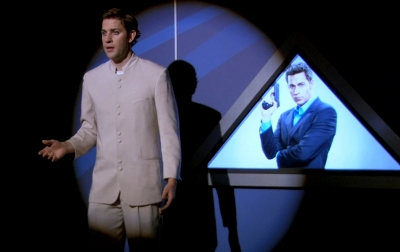
John Krasinski in one of The Office's lower moments


This will hardly come as a surprise to anyone paying attention, but the American edition of The Office on NBC and How I Met Your Mother on CBS are closer to their last episode than their first. What might surprise some is just how badly these two mainstays of American TV comedy of the past decade are showing their age. In the past two months both shows lumbered across the finish line, wrapping up their most recent seasons, eighth for The Office and seventh for How I Met You Mother to little acclaim. In fact, much of the conversation about both have centered around questions as to why the series are even bothering to continue producing new episodes. Debates about the quality of the shows’ current output or their future endeavors aside, the twinned declines of The Office and How I Met Your Mother provide insight into the way American television creates and sustains comedies and why so many fall apart under their own weight.

The Office and How I Met Your Mother debuted only a few months apart in 2005, and quickly the kind of critically acclaimed but lightly viewed comedies that had popped up and been snuffed out, off and on, since I Love Lucy blazed the trail for TV comedy in the 1950s. The Office’s mockumentary style and cringe-inducing humor were lifted wholesale from its British predecessor, and when combined with a cast of reliable comedic talent led by Steve Carrell, lent the show much of its appeal. How I Met Your Mother was more traditional in its style and humor, it is a 3-camera sitcom shot primarily on 2 sets, much like Seinfeld, Cheers, and most every mega-popular sitcom since the aforementioned Lucy. Where it differed was in its narrative structure, centered on a framing device of a middle-aged dad in the 2030s telling his kids about how he met their mother, the show specialized in plots that featured heavy doses of asides and callbacks. Most every episode involved some kind of storytelling derring-do, having as much fun in the telling of its story as it did in the actual contents of the story.

Both shows then, had notable differences from the generation of mega-popular sitcoms that were being retired as they came on the air. Friends, Frasier, and Everybody Loves Raymond, shows that had won both massive audiences and critical acclaim, all left the air in 2004 or 2005, and left no clear successor in their wake. Shows like Arrested Development had won wide acclaim but not broken through with audiences, and both The Office and HIMYM more or less followed in that show’s footprints. They carved out a niche on their respective networks, produced consistently high-quality episodes for about 4 seasons, but never broke through as true water cooler hits. They were something more than cult hits and something less than comedy blockbusters, and in an era when TV in general was bleeding viewers every week that was good enough.

Even at the peaks of their popularity and acclaim though, both shows suffered from some notable flaws. The Office’s mockumentary format meant that the Dunder Mifflin workers that TV audiences got to know so well were aware of their role as TV characters, since the premise of the show was that a documentary was being filmed about this particular office. This meant that the rhythms and agonies of everyday office life could be filmed realistically, and lent much to the blooming romance between Jim and Pam that defined so much of the first few seasons. However, it also meant that when the characters acted stupidly or unbelievably it tested credulity in ways that characters in a more typical sitcom would not. When Dwight climbed on the roof of a house during a corporate party to test the sturdiness of the chimney’s masonry or Michael camped in the woods to prove his managerial mettle it elicited as much eye-rolling as chuckling. No fools could truly act so foolishly in real life without sever repercussions, and since we were meant to believe that this was a real office such antics often acted as a drag on the show. This also lead to the writers taking liberties with the characters, changing their motivations and actions from week to week so as to meet the needs of being simultaneously ‘real’ and characters on a sitcom (i.e. the weekly guessing game of how smart Carrell’s Michael Scott or Ellie Kemper’s Erin Hannon were from week to week).

How I Met Your Mother’s unique narrative format also acted as an occasional wrench in much the same way. While individual episodes thrived on the narrative play, such as the sublime Pineapple Incident episode, increasingly the over-arcing narrative became a weight around the show’s neck. The initial seasons were thrilling in their ability to weave a great romance through the protagonist Ted’s everyday life with his friends. Hints of his future happiness would be dropped, and the audience has great fun guessing whether or not this girlfriend or that ex would become the much-awaited mother. As the series entered its 5th and 6th seasons though, and the search for his future wife dragged on with much repetition and only hints towards some kind of resolution, any sense of overall narrative momentum was lost.

For both The Office and How I Met Your Mother these troubling tendencies came to a head in the 2011-2012 television season. On The Office the departure of Steve Carrell from his leading role left the series utterly rudderless. Carrell’s performance had held together many episodes through sheer force of will, and the writers failed to prepare themselves for what was in essence a series reboot by writing all of the supporting characters into corners that did not allow them to step into the spotlight. The central couple of Jim and Pam were ensconced in family-building, having flirted with greater responsibilities or opportunities but failed to pursue them. Other characters, like Dwight or Andy had been under-served in the past, turned into weak caricatures of recognizable types that could not rise into the spotlight. This meant that the show spent most of the past season searching in vain for some vein of comedy to mine, taking turns with romance, corporate satire, and other plot shakeups but none took hold. The show’s core conceit had been stretched too thin, the characters had run out of stories, and the show spent each week wallowing around. It attempted to redo formerly winning plot-lines, perhaps most notably a retread of season five’s Michael Scott Paper Company. In the final few weeks it seemed to depart from recognizable office politics entirely, creating utterly unrealistic narrative twists like Catherine Tate’s odd Nellie usurping Ed Helm’s Andy simply by moving into his office.

On How I Met Your Mother the necessities of the over-arcing narrative meant that that show also fell back on old plot-lines. Cobie Smulder’s Robin briefly revived her romantic feelings towards both Neil Patrick Harris’s Barney and Josh Radnor’s Ted. Marshall and Lily (Jason Segel and Alyson Hannigan), the show’s resident married couple, spent the season vacillating on where to live suburbs vs. city) and how to start a family (baby now?), but without any real sense of play. For the most part, the show simply spun its wheels, introducing one-off characters and somewhat lazily wasting time while waiting for the Mother’s eventual reveal (presumed to be in the series’ final episode, which may be years in the future). A few episodes stood out, most notably the wrenching Symphony of Illumination, when Robin dealt with the news that she was infertile and would never have children by addressing narration to her imagined, never-to-be, children. But for much of the season viewers were treated to seeing Barney deal with becoming less a sociopath for the fourth straight season and Ted drifting ever deeper into outright douchbaggery, neither of which felt fresh or winning.

The problems in both shows latest seasons are, in essence, representations of the structural supports of nearly every American TV comedy. TV sitcoms are built on a very solid narrative structure. In essence, the show’s basic premise (documentary filmed in small office or dad tells his kids how he met their mom) must be maintained episode to episode. This means that the overall narrative can only move at a glacial pace, so as to make sure that the balance of the basic premise is not too upset. If Ted meets the mother while grabbing coffee one morning or the denizens of the office go about their jobs without comedic hi-jinks the entire endeavor could become dangerously unfamiliar to the audience. Since TV networks want their shows to appeal to as many viewers as possible, this means that no one in the audience who is even vaguely familiar with the series should ever be lost as to what is going on in a particular episode.  This works well enough for 50-75 episodes, but eventually the bloom comes off the rose and what once was fresh suddenly seems endlessly dull. Because of this, neither The Office nor How I Met Your Mother have been able to grow or change organically. Stuck in this strange stasis of a long-running sitcom world, they have responded by disappointing many of those who once loved them. Such a fate is hard to endure for a fan of any once-great show, but until every TV executive decides that the way to make money is to emulate the narrative chutzpah of outre series like Mad Men or Louie (about which more will be said in later essays from yours truly) it will befall many more series in the future.


Posted in: Television Tagged: How I Met Your Mother, Sitcoms, Television, The Office
« Previous 1 2 3 4 5 … 30 31 32 33 34

Share

Share on twitter
Twitter
Share on facebook
Facebook
Share on google
Google

Addison Recorder on Twitter

Addison Recorder
  • Andrew pays tribute to George Martin, producer without peer, and keyboard maestro Keith Emerson. https://t.co/I3N5iKiMXY 12:00:56 PM March 14, 2016 ReplyRetweetFavorite
  • 90 minutes to #Oscars so one more time - Alex, Andrew, and Travis make their picks. https://t.co/X23YYQ4J3i 05:59:57 PM February 28, 2016 ReplyRetweetFavorite
  • The annual Oscar Picks column is up! Alex, Andrew, and Travis tell the cold, hard truth about the nominees. https://t.co/X23YYPN7EI 12:21:01 PM February 26, 2016 ReplyRetweetFavorite
  • T-minus two hours to the @TheGRAMMYs - more than enough time to revisit Andrew's Album of the Year recap. https://t.co/BhUdmb97Wi 04:59:46 PM February 15, 2016 ReplyRetweetFavorite
  • Andrew previews the @musicboxtheatre 70mm Festival starting 2/19 and recommends some essential films! https://t.co/C2S6y3gkgq 12:04:12 PM February 12, 2016 ReplyRetweetFavorite
@addisonrecorder

Recent Posts

  • The Smartest Guys in the Room: Remembering George Martin and Keith Emerson
  • Oscar Picks 2016
  • Mr. Rostan at the Movies: 70 Millimeters of Sheer Adventure
  • The Claustrophobic Folklore of The Witch
  • 2666 at the Goodman Theater

Archives

Follow Us!

Follow @addisonrecorder

Recent Comments

  • Mr. Rostan at the Movies: 70 Millimeters of Sheer Adventure on Alex and Andrew Debate the Sight & Sound List: Part One
  • The Claustrophobic Folklore of The Witch on The Horror of Metaphor in It Follows
  • Mr. Rostan at the Movies: Catching Up With Oscar on Our Month in Pop Culture: May 2015
  • Mr. Rostan at the Movies: Catching Up With Oscar on Oscar Nomination Reactions – 2016
  • War Damn Peter on Celebrating 50 Years of “A Charlie Brown Christmas”

Meta

  • Log in
  • Entries feed
  • Comments feed
  • WordPress.org

Copyright © 2025 the Addison Recorder.

Church WordPress Theme by themehall.com